














Reading time: 6 minutes
You are standing in front of the supplement shelf or scrolling through an online shop and find the same preparation in three packages: as a spray, as drops in an oil bottle, as a capsule. Vitamin D3K2 drops or capsules—that is usually the first decision to be made before the dosage is even mentioned. The sales arguments for these almost always sound the same: better absorption, faster effect, higher bioavailability.
Before you decide on a form, it is worth taking a look at what the research actually reveals, and that is significantly less spectacular than the marketing of the respective form would have you believe.
Content
- What the studies actually say about sprays, drops, and capsules
- Why the form is secondary for fat-soluble vitamins
- Capsule, drop, spray: Where the three forms actually differ
- Vitamin D3K2 drops or capsules: Which form fits your everyday life
- Conclusion
- Briefly explained: The most important questions about sprays, drops, and capsules
What the studies actually say about sprays, drops, and capsules
The most meaningful study available on this question comes from Grammatikopoulou and colleagues, who published a systematic review on this very comparison in the journal Nutrients in 2020.¹ Out of over 9,700 reviewed studies, the team identified only four randomized, controlled trials that had directly tested vitamin D3 buccal spray against other forms of intake such as capsules or drops—a foundation that is already quite limited for such a frequently claimed superiority.
Of these four studies, only one found an advantage for the spray form, and that very study had a methodological weakness: the washout phase between the two test phases was only 10 days, whereas 10 weeks would have been recommended given the long half-life of vitamin D in the body. The remaining three studies found no significant difference between the forms of administration. The authors' conclusion is appropriately sober: the current state of research does not allow for a reliable statement that one form is superior to another.
Why the form is secondary for fat-soluble vitamins
Vitamin D3 and vitamin K2 are fat-soluble: the body only absorbs them along with dietary fat, regardless of the form of administration.² This is why the German Nutrition Society recommends taking vitamin D supplements with a fat-containing meal; this applies to capsules just as much as to drops or sprays. What counts, therefore, is less the external form and more the question of whether a fat matrix is present at all—as is the case with MCT oil—and whether you reliably take the preparation at the right opportunity.
Capsule, drop, spray: Where the three forms actually differ
Even if efficacy does not clearly differ in research, there are real differences between the three forms. They just lie elsewhere than marketing usually suggests.
Regarding dosage precision, the spray has a practical advantage over drops: one spray delivers a fixed, pre-determined amount. With drops, on the other hand, you have to count them yourself, which requires a steady hand and good light—rather impractical when out and about, on a train, or in a rush.
Regarding the need for water, the difference lies between the spray and the capsule: a capsule is usually taken with a sip of water, whereas a spray or drops can be taken directly with a meal, entirely without a glass of water.
A third, often overlooked point concerns swallowability itself. Difficulty swallowing pills is not a marginal phenomenon: according to a review by Ulbricht (2019) for the Drug Commission of the German Medical Association, about 14 percent of independent elderly people are affected, and in nursing facilities, it is over half of the residents.³ For this group, liquid forms like drops or spray are an obvious alternative to capsules, regardless of any question of bioavailability. It is also evident with other nutrients that the form of a preparation often determines the effect less than one assumes, for example, regarding the differences between individual forms of magnesium.
Regarding shelf life and handling, drops and sprays hardly differ from capsules: all three forms should be stored in a cool place protected from light. An open oil bottle is slightly more sensitive than a closed capsule, but in practice, it rarely makes a difference over the usual consumption period of a few months.
Vitamin D3K2 drops or capsules: Which form fits your everyday life
In the end, the question of the "best" form is therefore more a question of the form you actually use regularly. Those who have a fixed morning routine with breakfast get along well with a capsule. Those who are on the go a lot, do not have a fixed meal routine, or simply do not want to have water on hand are more flexibly positioned with a spray or drops. And those who generally have difficulty swallowing should opt for a liquid form anyway, regardless of any other argument.
A simple trick helps with all three forms to really stick to daily intake: link it to an already established habit instead of relying on your own memory. Those who prefer a capsule but rarely have a relaxed breakfast in the morning can place it within reach next to the coffee machine and take it with their first coffee, ideally with a little milk or a small snack so that enough fat is available for absorption. Those on the go can keep the spray or drops in their handbag, backpack, or desk drawer and link the intake to a fixed moment in the daily office routine, such as the first lunch break. The decisive factor is not the perfect moment but a consistent one.
When deciding on the dosage form, it was particularly important to us that it is convenient for you to use.
– Dr. Magdalena Schauenberg
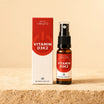
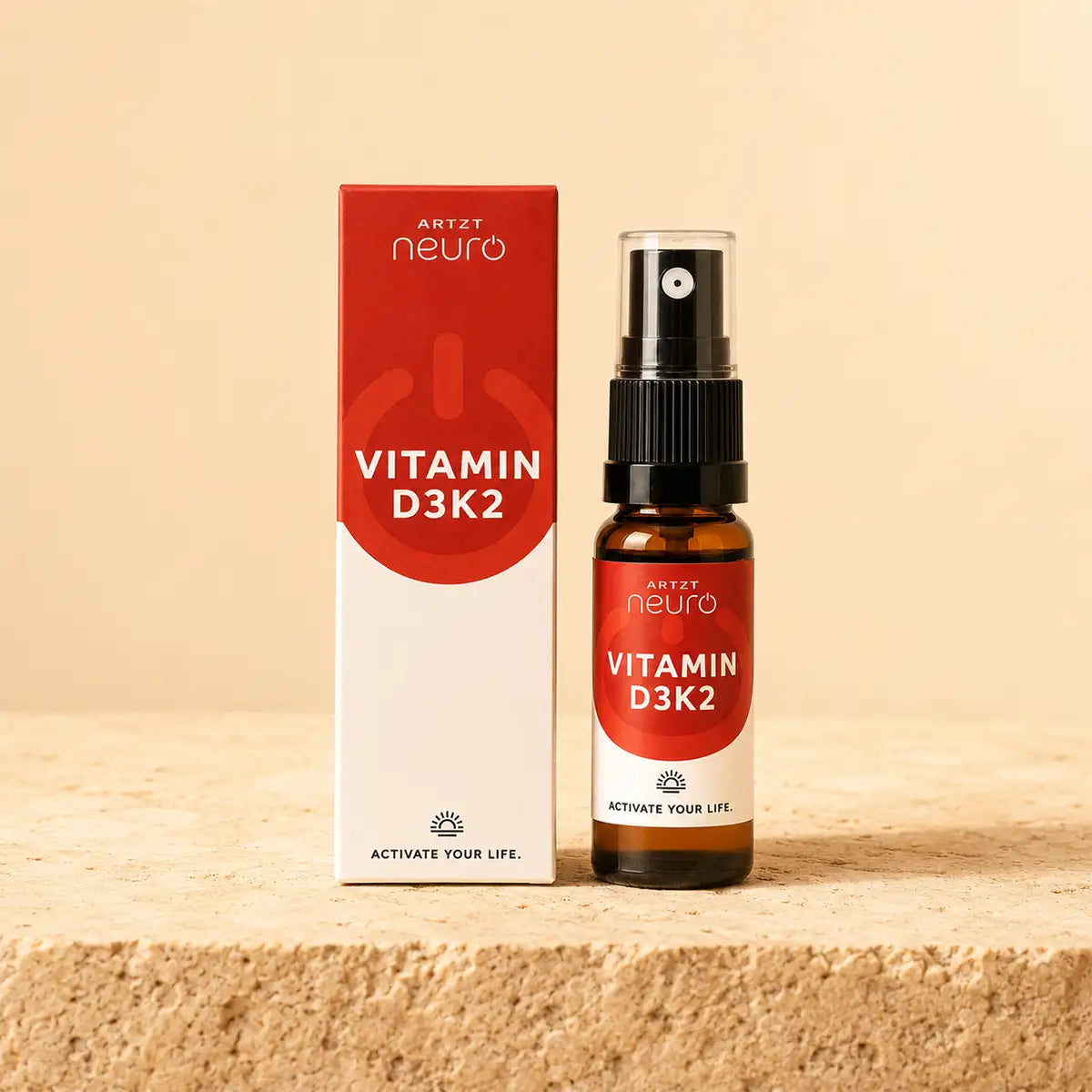
The ARTZT neuro Vitamin D3K2 spray is intended for exactly these everyday situations: one spray daily, ideally with a fat-containing meal, without water, without counting drops. It is therefore not a fundamentally "better" solution than a good capsule, but the more practical one for all those seeking an uncomplicated, water-free routine.
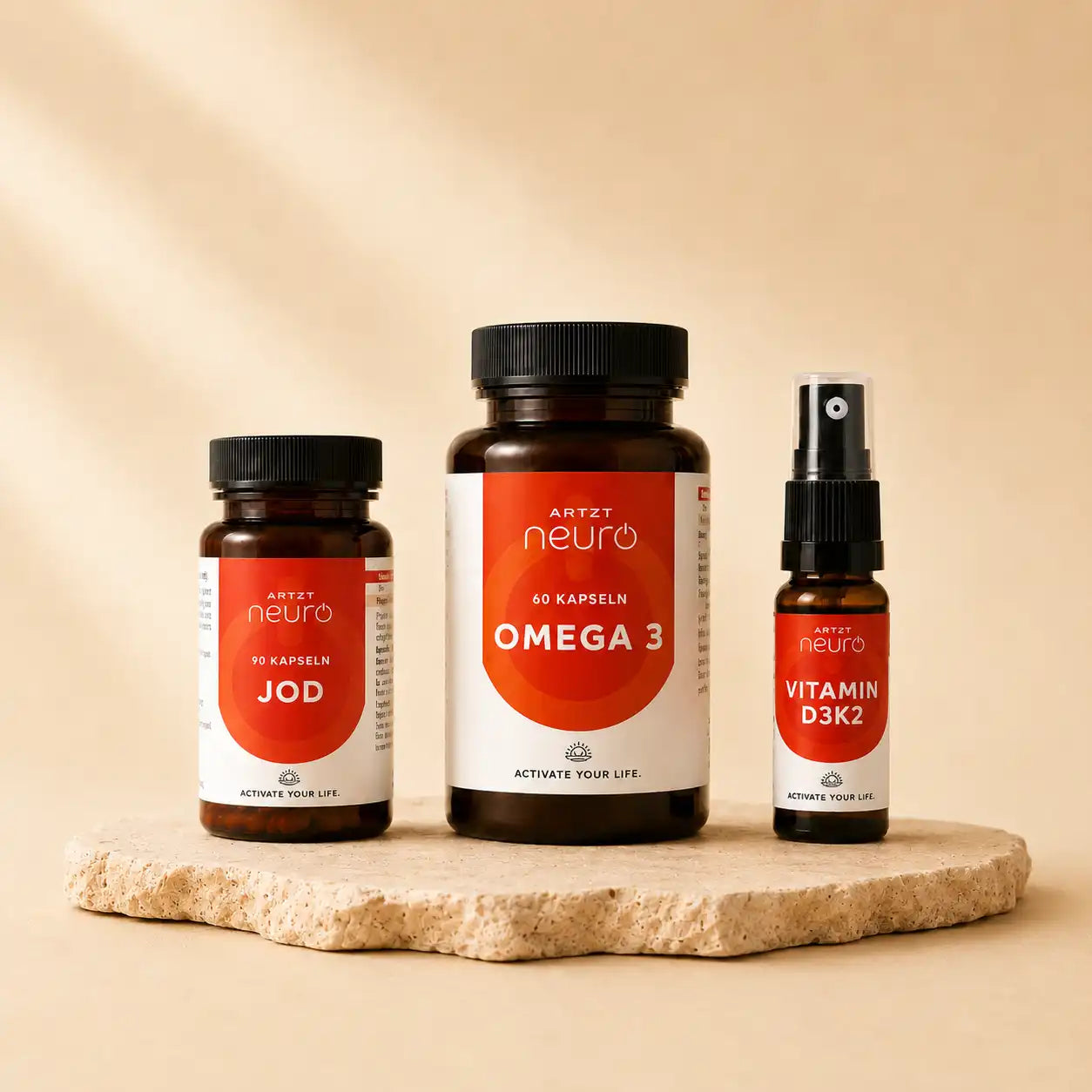
Those who, in addition to vitamin D3K2, also want to cover the other two basic building blocks can find them in the ARTZT neuro Basic Supply, and consciously in different forms: iodine with magnesium as a capsule, omega 3 as a capsule, vitamin D3K2 as a spray. This also shows, on a small scale, what this article is actually about: it is not about deciding on one form, but about choosing the form for each nutrient that actually works in your own everyday life.

Conclusion
The choice between sprays, drops, and capsules is less a question of science than a question of habit. The available research shows no reliable difference in absorption, but it does show noticeable differences in dosage, handling, and suitability for everyday use. As with all elements of the ARTZT neuro system, the rule applies: the best supplement is the one you actually take regularly, not the one that sounds most convincing on paper.
Briefly explained: The most important questions about sprays, drops, and capsules
Is a Vitamin D3K2 spray just as effective as drops or capsules?
According to the current state of research, there is no reliable difference in bioavailability between the three forms. A systematic review of four randomized studies found no general superiority of one form over the others.¹
Do I have to take Vitamin D3K2 with a meal?
Yes. Since both vitamins are fat-soluble, they are best absorbed together with a fat-containing meal, regardless of whether you use a capsule, drops, or spray.²
How long are Vitamin D3K2 drops or a spray shelf-stable after opening?
As with most oil-based preparations, storage in a cool place protected from light is recommended, as is consumption within the period after opening specified on the packaging, which is usually a few months.
Who is a spray particularly suitable for?
For everyone who wants to supplement while on the go, without water, or without a fixed meal routine, as well as for anyone with difficulty swallowing pills, which occurs more frequently than often assumed.³
References
- Grammatikopoulou, M. G., Gkiouras, K., Nigdelis, M. P., Bogdanos, D. P. & Goulis, D. G. (2020). Efficacy of Vitamin D3 Buccal Spray Supplementation Compared to Other Delivery Methods: A Systematic Review of Superiority Randomized Controlled Trials. Nutrients, 12(3), 691. DOI: 10.3390/nu12030691
URL: https://www.mdpi.com/2072-6643/12/3/691 - German Nutrition Society (DGE). FAQ Vitamin D.
URL: https://www.dge.de/gesunde-ernaehrung/faq/vitamin-d/ - Ulbricht, K. (2019). Swallowing disorders in old age – Presby(dys)phagia. Arzneiverordnung in der Praxis, Issue 3/2019.
URL: https://www.akdae.de/arzneimitteltherapie/arzneiverordnung-in-der-praxis/ausgaben-archiv/ausgaben-ab-2015/ausgabe/artikel/2019/2019-03-04/schluckstorungen-im-alter-presbydysphagie
Transparency note: This article was created with the help of AI and subsequently edited.