
















Reading time: 6 minutes
Tired, but not truly exhausted. Stressed, but without a concrete reason. Awake, even though the body wants to sleep. Many people know this state – and are looking for that one solution that makes everything better. It doesn't exist. But there is an understanding that changes everything: health is not a single problem, but a system. Holistic Health explains why – and what that means for your daily life.
Contents
- What is Holistic Health – and why is treating symptoms not enough?
- The modern lifestyle and its biological price
- What Holistic Health concretely means: systems, not individual parts
- The nervous system: the silent center of Holistic Health
- Breathing as the most direct access to the system
- Why individual measures are often not enough
- Holistic Health in everyday life: What this concretely means
- Holistic Health and ARTZT neuro: Why we rely on system thinking
- Conclusion: Health is not a state – it is a balance
What is Holistic Health – and why is treating symptoms not enough?
Holistic Health – or integral health – is not a new concept. The World Health Organization (WHO) already stipulated in its constitution in 1946 that health is not merely the absence of disease, but "a state of complete physical, mental and social well-being."¹
This definition sounds self-evident at first glance. In practice, the reality for many people is different: symptoms are treated when they arise. The rest of the system remains unconsidered.
Holistic Health reverses this logic. The starting point is not illness, but the human being as a networked system – consisting of the nervous system, musculoskeletal system, metabolism, respiration, sleep, social integration, and mental health. All these systems are in constant interaction. An imbalance in one area will sooner or later affect all others.
The modern lifestyle and its biological price
Biologically, we are designed for movement, light, social connection, and sufficient regeneration. Modern life, however, looks different.
According to the DKV Report 2025 by the German Sport University Cologne, the average German sits for over ten hours on weekdays – a new record level, almost two hours more than ten years ago.² Only two percent of those surveyed meet the criteria of a comprehensively healthy lifestyle in all five areas examined.²
The consequences are not dramatic in the medical sense – but they are noticeable: inner restlessness that doesn't subside. Exhaustion that doesn't truly disappear with sleep. A mind that can't switch off even after work. A lack of energy, although objectively there is no deficiency.
These are not signs of weakness. They are signs of a system under constant stress. Preventive health begins precisely at this point: not when the system collapses, but when it silently comes under pressure.
What Holistic Health concretely means: systems, not individual parts
Holistic health doesn't mean that everything has to function perfectly simultaneously. It means that the body's most important systems are in a functional balance.
Within ARTZT neuro, these are five interconnected elements:
Movement is the most fundamental health stimulus. Not as sport in the classical sense, but as a physiological necessity. Movement activates muscles, the nervous system, metabolism, and circulation. Those who move too little weaken all other systems.
Light gives the body its circadian rhythm. Natural daylight in the morning signals to the nervous system: activation. Darkness in the evening signals: regeneration. Without this rhythm, sleep, cortisol, and energy production go out of sync.
Nutrients provide the biochemical basis for all functions: energy, nerve signals, hormone production, cell repair. A deficiency – whether of iodine, vitamin D, omega-3 fatty acids, or magnesium – affects not just one area, but the entire system.
Regeneration is not passive rest. It is the active process in which the nervous system is regulated, tissue is repaired, and energy is restored. Without sufficient regeneration, stresses accumulate – until the system reacts.
Social connection is biologically deeply ingrained. The human nervous system is designed for social security. Isolation, loneliness, and lack of connection are registered by the autonomic nervous system as a threat – with corresponding effects on stress, the immune system, and mental health.
Living in an appropriate way means treating these five elements not as extras, but as basic biological needs. Those who understand this approach health systemically rather than symptomatically.
The nervous system: the silent center of Holistic Health
No other system in the body is as central to holistic well-being as the autonomic nervous system. It unconsciously regulates heart rate, breathing, digestion, sleep, and immune function.
The autonomic nervous system has two main states, simplified:
The sympathetic nervous system is the activation system. It mobilizes energy, sharpens attention, and prepares for action.
The parasympathetic nervous system is the regeneration system. It lowers heart rate and blood pressure, promotes digestion and sleep, and enables true recovery.
A healthy nervous system flexibly switches between both states. This very flexibility – measurable via Heart Rate Variability (HRV) – is considered by researchers as a marker for an adaptable, resilient nervous system.³
The problem in modern daily life: chronic stress, sensory overload, and lack of recovery phases keep the system perpetually in sympathetic mode. The nervous system no longer finds true rest – even when the calendar would allow it.
This doesn't just affect people on the verge of burnout. It affects anyone whose system is constantly under tension – without an acute collapse, but with a noticeable loss of control over their own state. Building resilience begins with recognizing this state.
Breathing as the most direct access to the system
Of all the factors that directly influence the nervous system, breathing is the most accessible. It is the only autonomic bodily function that can be fully consciously controlled.
Deep, calm breathing – especially a prolonged exhalation – activates the vagus nerve, thereby stimulating the parasympathetic nervous system. Shallow chest breathing, typical under stress, does the opposite: it signals alarm to the nervous system.
This is well-supported scientifically. A systematic review and meta-analysis (223 included studies) shows that slowed conscious breathing significantly increases vagally mediated HRV – a direct measure of parasympathetic nervous system activity.⁴ Breathing techniques also prove to be a therapeutically effective tool for stress reduction and improved regeneration – even in clinical practice.⁵ Nasal breathing, conscious diaphragmatic breathing, and controlled breathing rhythms are not wellness practices – they are tools for direct system regulation.
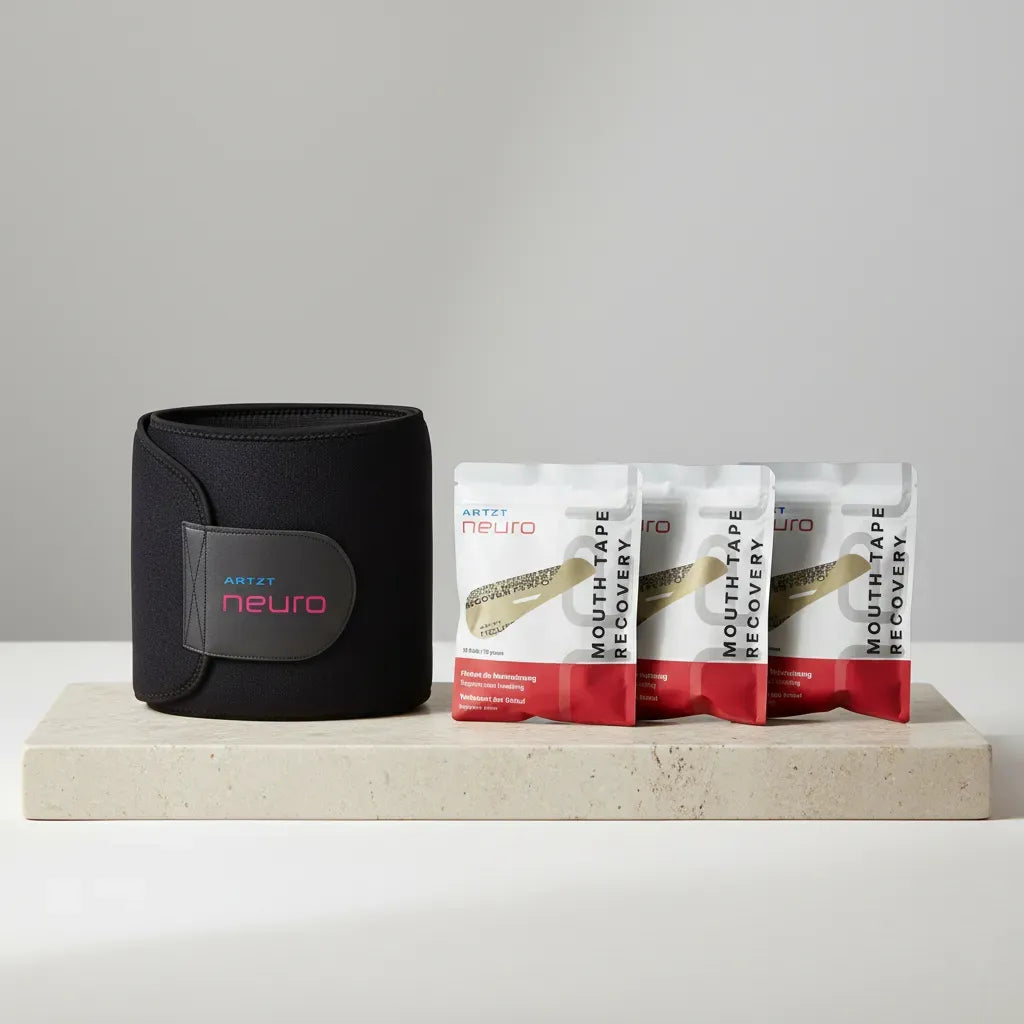
Tools like breathing trainer and breathing belt address precisely this. The breathing trainer exercises respiratory muscles and breath control with adjustable resistance levels and acoustic feedback. The breathing belt promotes diaphragmatic breathing through gentle pressure on the upper abdomen – and thus deeper, parasympathetically effective breaths in everyday life.

Why individual measures are often not enough
Many people know this cycle: You start with breathing exercises, meditation, or magnesium. It helps in the short term. But the baseline state doesn't change sustainably.
The reason: individual measures always affect only one part of the networked system. Someone who consistently sleeps too little, sits a lot, and hardly regulates their nervous system cannot compensate for this deficit through supplementation alone. Conversely, supplements become more effective when the nervous system is fundamentally better regulated.
Systemic health works as a whole – or it doesn't work properly. Holistic Health therefore doesn't mean changing everything at once. It means understanding the systems as a connected whole – and then gradually addressing the right points.
The practical question is not: "What else do I need?" The better question is: "Which system is currently under the most pressure – and how can I specifically relieve it?"
Holistic Health in everyday life: What this concretely means
Holistic health is not a lifestyle philosophy for people with a lot of time. It is an attitude towards one's own system – and it consists of small, everyday decisions.
Some examples:
- Daylight in the morning instead of immediate screen time: regulates the circadian rhythm and the cortisol curve.
- Short movement breaks instead of 9 hours of uninterrupted sitting: reactivates muscles and metabolism.
- Conscious diaphragmatic breathing in stressful moments: directly stimulates the parasympathetic nervous system. The breathing belt helps to anchor this breathing pattern in everyday life.
- Nasal breathing when falling asleep: promotes deeper, more regenerative sleep phases. Mouth Tape Recovery specifically supports nasal breathing at night.
- Visual relief: Those who look at screens for many hours daily stress the nervous system via the visual channel. The pinhole glasses activate the eye muscles and reduce visual sensory stress.
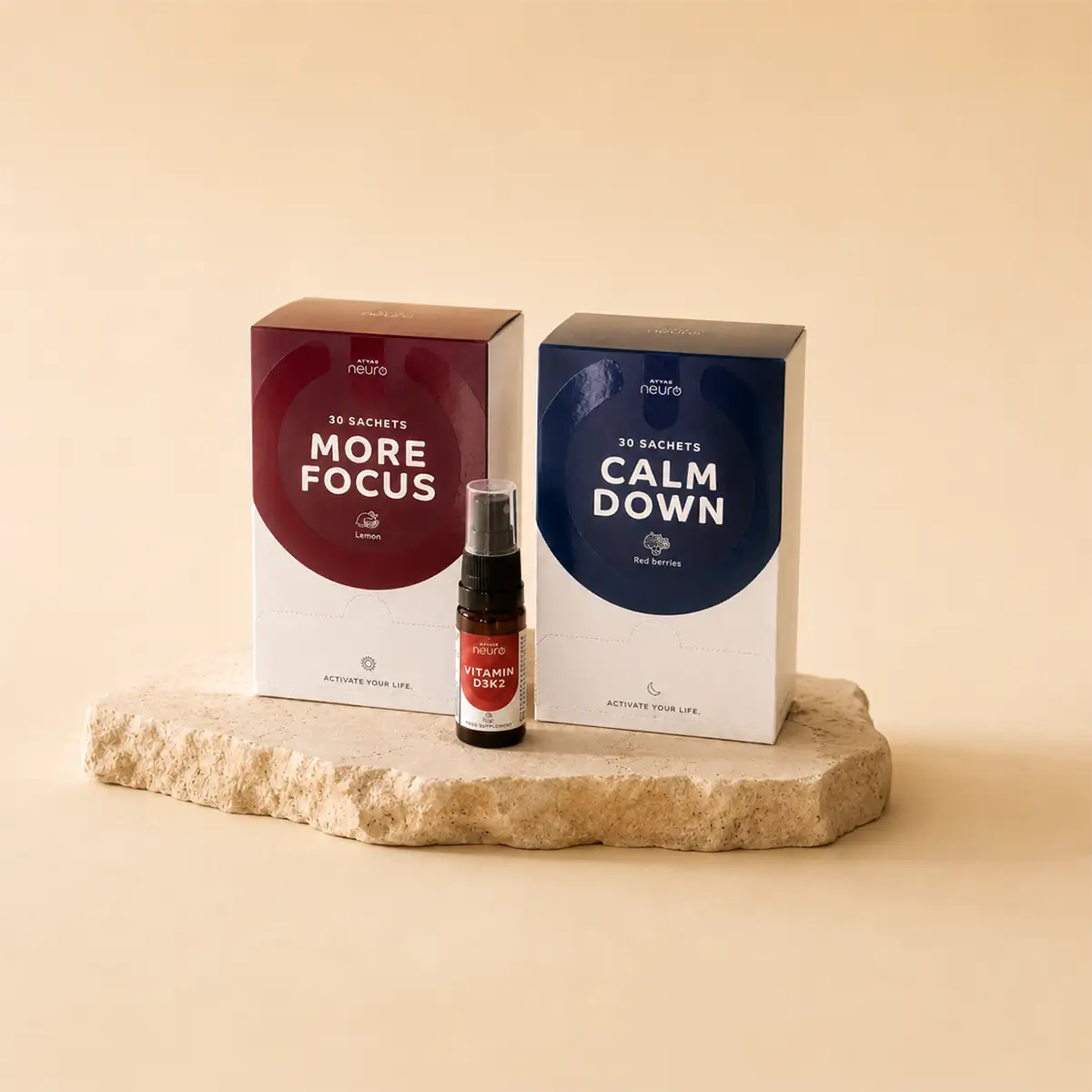
- Targeted nutrient supply for known deficiencies: gives the body the biochemical basis it needs for function and regulation.
None of these measures are spectacular. All together, they change the system state – noticeably and sustainably.
Holistic Health and ARTZT neuro: Why we rely on system thinking
ARTZT neuro stands for an approach that understands health as a networked system. That's why we don't develop isolated products for individual symptoms. Every tool, every supplement is a tool within a larger system – and is explained and used as such.
The breathing trainer is not a gadget. It is an access to the nervous system through the most direct channel we have: breathing.
The Mouth Tape Recovery is not a sleep aid in the classical sense. It promotes nasal breathing – and thus parasympathetic regulation at night.
The breathing belt makes diaphragmatic breathing tangible for everyday life: without extensive practice, with a noticeable effect.
The pinhole glasses are not an optical tool. They are a neurological training system for the visual system – the often underestimated input channel of the nervous system.
The supplements close biochemical gaps that hinder the system's function – precise, dosed, and without hype.
Holistic Health is the framework in which these approaches make sense. Not as a collection of individual measures, but as a system that supports itself.
Conclusion: Health is not a state – it is a balance
Holistic Health is not an alternative life philosophy. It is a scientifically founded perspective on what truly keeps people healthy: the interplay of biological systems, which comes under pressure from a modern lifestyle – and can be supported again through targeted, everyday measures.
The first step is not the perfect routine. The first step is understanding: Your body is not a collection of individual parts. It is a system. And systems react most strongly when you address the right points.
References
¹Constitution of the World Health Organization, 1946. Federal Publications Platform of Switzerland (Fedlex). Signed July 22, 1946, entered into force April 7, 1948.
URL: https://www.fedlex.admin.ch/eli/cc/1948/1015_1002_976/de
²DKV Report 2025: "Germany in a Health Check". DKV Deutsche Krankenversicherung AG, German Sport University Cologne and University of Würzburg, August 2025.
URL: https://www.dshs-koeln.de/universitaet/newsroom/meldungen/detail/news/dkv-report-2025-deutschland-im-gesundheitscheck
³BARMER Health Magazine: "Vagus Nerve: The Secret to Relaxation?" Status: 2025.
URL: https://www.barmer.de/gesundheit-verstehen/psyche/stress/vagusnerv-1482876
⁴Laborde et al. (2022): "Effects of voluntary slow breathing on heart rate and heart rate variability: a systematic review and a meta-analysis." Neuroscience & Biobehavioral Reviews. (223 studies, peer-reviewed)
URL: https://www.sciencedirect.com/science/article/abs/pii/S0149763422002007
⁵Sportärztezeitung: "Breathing. Key to Performance Enhancement, Relaxation and Cardiovascular Prevention." May 2025. (incl. Rosenfeldt et al. 2011, HRV study references)
URL: https://sportaerztezeitung.com/rubriken/training/19798/atmung/
Transparency note: This text was generated by our editor Jonas using AI and subsequently edited.