

















Reading time: 5 minutes
Anyone looking for more energy, better sleep, or more focus today quickly finds products that promise just that. Supplements have long been a daily routine for many people.
The problem is not the supplement itself. The problem is the expectation behind it: that a single measure is enough to bring a complex system into balance.
Holistic health works differently. This article explains why – and what research on the world's longest-lived populations reveals about it.
Contents
What does holistic health really mean?
Holistic health is not a wellness term. It is a biological fact.
The human body is not a device that can be optimized with a single switch. It is an interconnected system of neural pathways, hormones, metabolic processes, sleep cycles, and movement patterns – all in constant interaction with each other.
If you sleep poorly at night, your concentration suffers the next day. If you move too little, your stress tolerance deteriorates. If your nervous system is constantly in alarm mode, your body can absorb and utilize nutrients less effectively.
Holistic health therefore means: not optimizing a single element in isolation, but understanding the interplay and supporting it purposefully. The five elements of Holistic Health play a central role: light, movement, nutrients, regeneration, and social connection. If one is permanently missing, the entire system gets out of balance – regardless of how well the other four function.
What the Blue Zones teach us – and what most people overlook
The Blue Zones are regions of the world where people live to an above-average age: Okinawa in Japan, Sardinia in Italy, the Nicoya Peninsula in Costa Rica, Ikaria in Greece, and Loma Linda in California. Buettner & Skemp have systematically investigated the common lifestyle habits of these populations and published their findings in the American Journal of Lifestyle Medicine. A central finding: Only about 20 percent of life expectancy is genetically determined – around 80 percent is due to lifestyle and environment.¹
The research documents nine common characteristics of these populations, which Buettner & Skemp refer to as the “Power 9":¹
- Move naturally – everyday movement without conscious exercise: gardening, walking, physical household routines
- Purpose – a clear sense of meaning and life's purpose (Okinawan: Ikigai; Nicoyan: Plan de vida)
- Downshift – established routines for stress reduction: naps, prayer, social gatherings
- 80% Rule – consciously stopping eating before feeling full (Hara Hachi Bu)
- Plant slant – predominantly plant-based diet; meat only occasionally and in small quantities
- Wine@5 – moderate, social alcohol consumption in most Blue Zones (except among Adventists in Loma Linda)
- Belong – belonging to a faith or purpose-driven community; 258 out of 263 centenarians surveyed belonged to such a community
- Loved ones first – close integration into family structures; older generations often live in or near the household
- Right tribe – a social environment that actively supports health-promoting behaviors
The crucial point is not just what these people do, but how it all came about: not through conscious optimization strategies, but through a living environment that structurally favors biologically beneficial behaviors. None of the documented longevity regions show that exceptional life expectancy is due to a single intervention. It is always an interplay of several factors.
Why supplements are still useful – but only as part of a system
People in the Blue Zones live in an environment that naturally supports their biology: plenty of daylight, natural movement, fresh food, manageable social structures. Most people in Germany live in a different reality.
According to the WHO European report and the US Environmental Protection Agency (EPA), people today spend around 90 percent of their time indoors – without sufficient daylight and fresh air.² We sit most of the day, eat processed food, and irregularly. And we carry a permanent flow of information that keeps our nervous system in a state of constant activation. This creates an Evolutionary Mismatch.
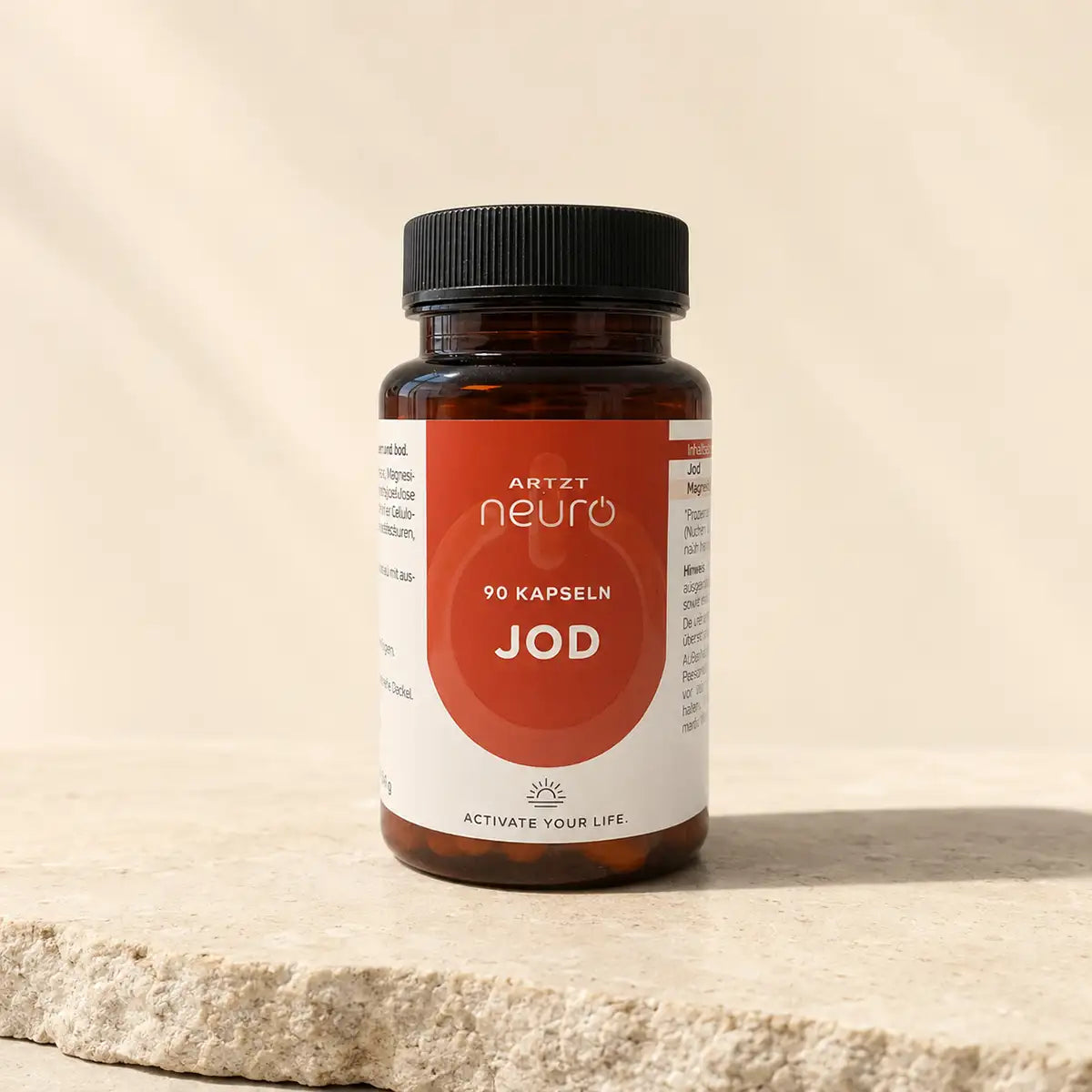
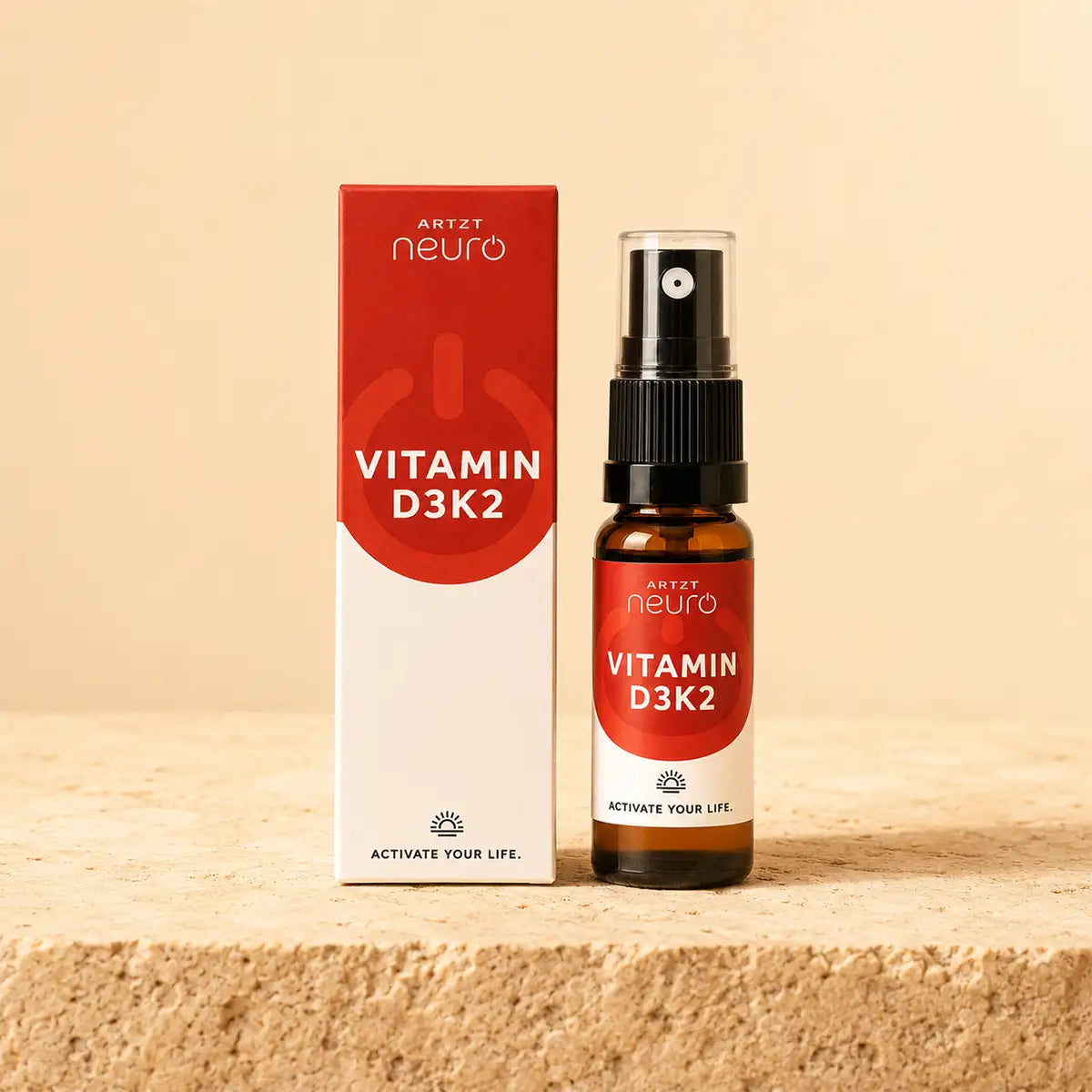
The result: nutritional gaps that cannot be closed by diet alone. The National Consumption Study II by the Max Rubner Institute – the most comprehensive representative dietary study for Germany to date, with almost 20,000 respondents – shows that 82 percent of men and 91 percent of women do not reach the recommended daily vitamin D intake. Iodine is classified as a critical risk nutrient.³ In terms of omega-3 index, the German population averages 4 to 6 percent – the recommended target range is 8 to 11 percent, as Schuchardt et al. show in their global analysis published in Progress in Lipid Research in 2024.⁴
In this context, supplements are useful. Not as a substitute for a healthy lifestyle. But as targeted support within a system – to close gaps that everyday life creates, and to provide the body with the biochemical basis it needs for good function.
The relevant framework for thinking is therefore not: "Which product solves my problem?" – but: "Which element in my system is undersupplied, and how can I specifically supplement it?"
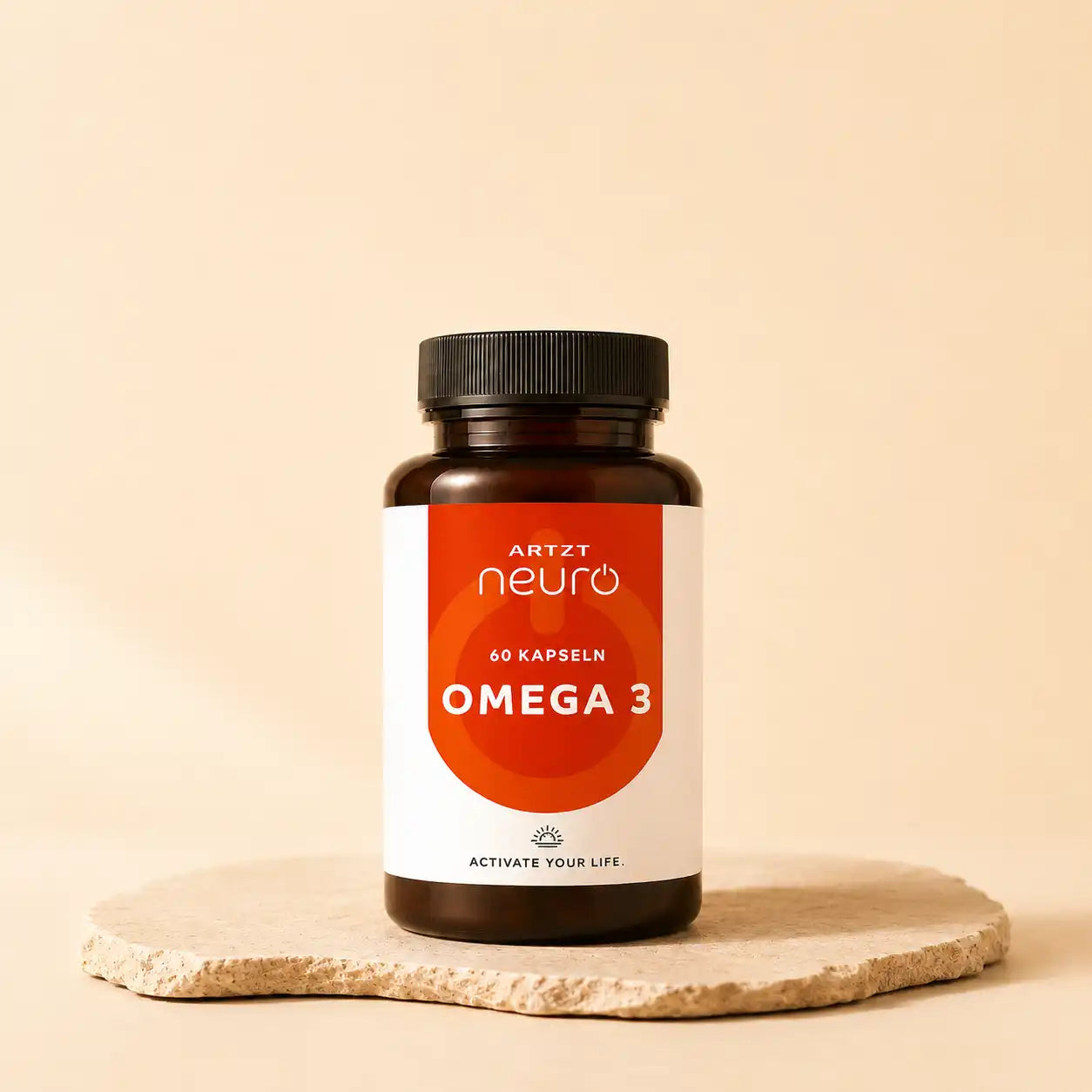
Hardware + Biochemistry: The ARTZT neuro Approach
This makes it clear why ARTZT neuro takes a different approach than traditional supplement brands.
Supplements address the biochemical level: they provide nutrients that the body needs for energy, focus, regeneration, and function. This is important and necessary. But it is only one level.
The other level is the nervous system – and its regulatory capacity cannot be fully addressed by nutrients alone. The nervous system reacts directly to physical stimuli: breathing rhythm, movement patterns, visual impulses. This is precisely where the ARTZT neuro tools come into play.
Breathing training activates the parasympathetic nervous system and supports stress regulation directly via breathing mechanics. Nasal breathing through Mouth Taping during sleep measurably improves sleep quality. Visual training with the pinhole glasses strengthens the neural system that controls movement, focus, and coordination.
Physical tools and supplements are not alternatives to each other – they work on different levels of the same system. This is precisely the holistic approach of ARTZT neuro: hardware and biochemistry as an integrated system, not as separate products.
Holistic health in everyday life: Where you can start
Holistic health sounds like a big project. In practice, it begins with an honest assessment.
The sensible starting question is not: "What all do I need to do?" – but: "Which element is most lacking in my system?"
Someone who sleeps poorly and doesn't wake up refreshed in the morning will benefit little from a focus supplement – as long as the underlying cause remains unaddressed. Someone who works under high pressure daily without giving their nervous system real recovery phases will also reach their limits even with good nutrient supply.
The first step is therefore clarity about which element in one's own system is most undersupplied. This is followed by targeted support – gradually and systemically.
A solid basic supply of the nutrients most commonly lacking in Germany – iodine, vitamin D, and omega-3 – is a sensible starting point for most people. Supplemented by a measure at the nervous system level: more conscious breathing, more consistent nasal breathing during sleep, more everyday movement.
Conclusion
Holistic health does not arise from a single measure. It is the result of a system in which several factors interact: movement, light, nutrients, regeneration, and social connection.
Supplements can be a useful part of this system – if they are used specifically to close documented supply gaps, and if they are embedded in a lifestyle context that also considers the other levels.
References
- Buettner, D. & Skemp, S. (2016). Blue Zones: Lessons from the World's Longest Lived. American Journal of Lifestyle Medicine, 10(5), 318–321.
DOI: 10.1177/1559827616637066
URL: https://pubmed.ncbi.nlm.nih.gov/30202288/ - WHO Regional Office for Europe (2013). Report on Health Risks of Air Pollution in Europe. Cited in: Velux Group (2018). The Indoor Generation Report. YouGov survey, n = 16,000, 14 countries.
URL: https://presse.velux.de/gesundheitsrisiken-fur-heutige-indoor-generation/ - Max Rubner-Institut / Federal Ministry of Food and Agriculture (2008). National Consumption Study II – Results Report Part 2.
URL: https://www.mri.bund.de/de/institute/ernaehrungsverhalten/forschungsprojekte/nvsii/ - Schuchardt, J. P., Beinhorn, P., Hu, X. F., Chan, H. M., Roke, K., Bernasconi, A., Hahn, A., Sala-Vila, A., Stark, K. D., & Harris, W. S. (2024). Omega-3 world map: 2024 update. Progress in Lipid Research, 95, 101286.
DOI: 10.1016/j.plipres.2024.101286
URL: https://pubmed.ncbi.nlm.nih.gov/38879135/
Note on transparency: This article was created by our editor with the help of AI and subsequently edited.

Leave a comment
All comments are moderated before being published.
This site is protected by hCaptcha and the hCaptcha Privacy Policy and Terms of Service apply.