




















Reading time: 5 minutes
You sleep seven hours, drink enough water, exercise. And yet: Listlessness in the morning. Concentration that wanes after two hours of work. A mind that won't stop racing in the evening – even though your body is long exhausted.
The question is not whether you are doing something wrong. Holistic health begins right here – with the question: What world was your body built for – and what world does it live in today?
Contents
Your body still lives in 10,000 BC
Humans have evolved over hundreds of thousands of years in a specific environment. Regular movement was not an option, but a condition for survival. Daylight structured the biorhythm from waking to sleeping. Social community was the most important protective factor of all. Food was nutrient-dense and came directly from the natural environment.
These conditions shaped your nervous system, calibrated your hormone balance, and trained your immune system – not over generations, but over hundreds of thousands of years of evolutionary adaptation.
And then came the modern world. In less than 200 years, our way of life has changed more radically than in the previous 200,000 years. The problem: Our biology has not kept pace.
Evolutionary biologists call this conflict Evolutionary Mismatch – the discrepancy between the environment an organism was optimized for and the environment it actually lives in. What was useful for short-term survival in the savanna becomes a problem in a world of screens, artificial light, and lack of movement.¹
Holistic Health – What the data shows
According to the DKV Report 2025 by the German Sport University Cologne, people in Germany sit for an average of over ten hours daily on weekdays – almost two hours more than ten years ago. In a body designed for continuous movement, this is no small matter. Only six percent of respondents meet the criteria for an all-round healthy lifestyle in all areas examined.²
This is not personal failure. It is the structural result of a living environment that, in key aspects, works against basic biological needs – and thus against the prerequisites for holistic health.
Three specific systems under pressure
Mismatch is not an abstract concept. It manifests in concrete biological systems – three of which are particularly affected.
Light and circadian rhythm
Daylight is the most important time cue for our biorhythm. It controls the release of melatonin and cortisol – hormones directly related to energy, sleep quality, and immune function.
The evolutionary normal state: morning light activates, darkness signals rest. The modern reality: hardly any natural light in the morning, but blue light exposure from screens until just before falling asleep. This systematically shifts the internal clock backward and reduces sleep quality – even with eight hours of sleep.
Movement as a basic need
Movement is not an add-on for the human system, but an evolutionary prerequisite. Muscle contractions activate signaling molecules that directly influence inflammation regulation, brain metabolism, and stress processing.³ A body that does not move not only loses strength – it gradually loses its regulatory capacities.
Nutrient supply: Gaps that hardly anyone knows about
Our dietary environment has changed faster than our biology. The result is structural supply gaps in micronutrients that are essential for basic bodily functions.
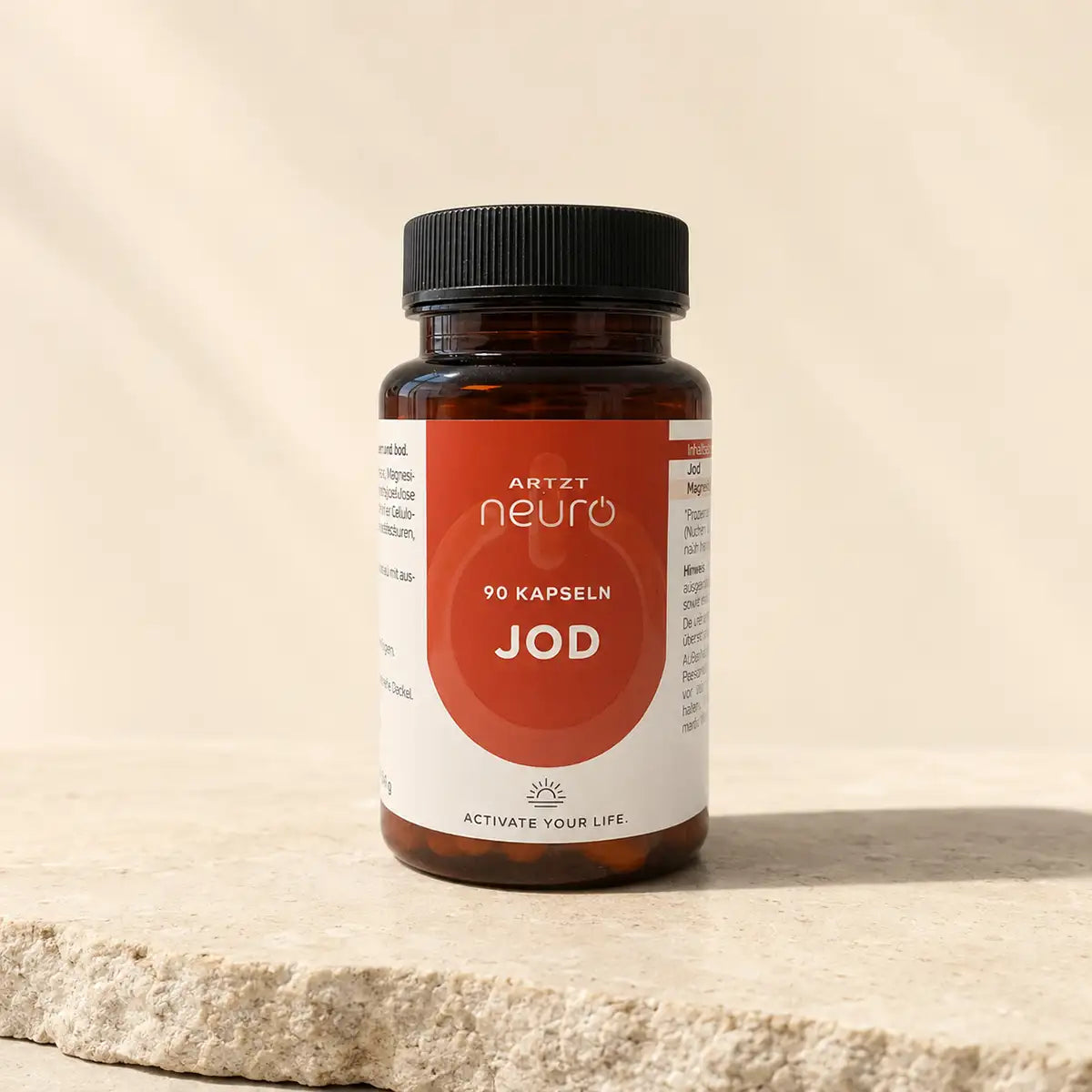
- Iodine: According to the National Consumption Study II by the Max Rubner Institute, without the use of iodized table salt, 96% of men and 97% of women do not meet the recommended iodine intake of the DGE.⁴ Iodine is essential for thyroid function and thus contributes to normal energy metabolism and normal cognitive function.
- Vitamin D: The DEGS1 study by the Robert Koch Institute shows that 30.2% of adults in Germany have a manifest vitamin D deficiency; only 38.4% are considered adequately supplied.⁵ The evolutionary normal state – regular sunlight exposure – is simply not given for most people today.
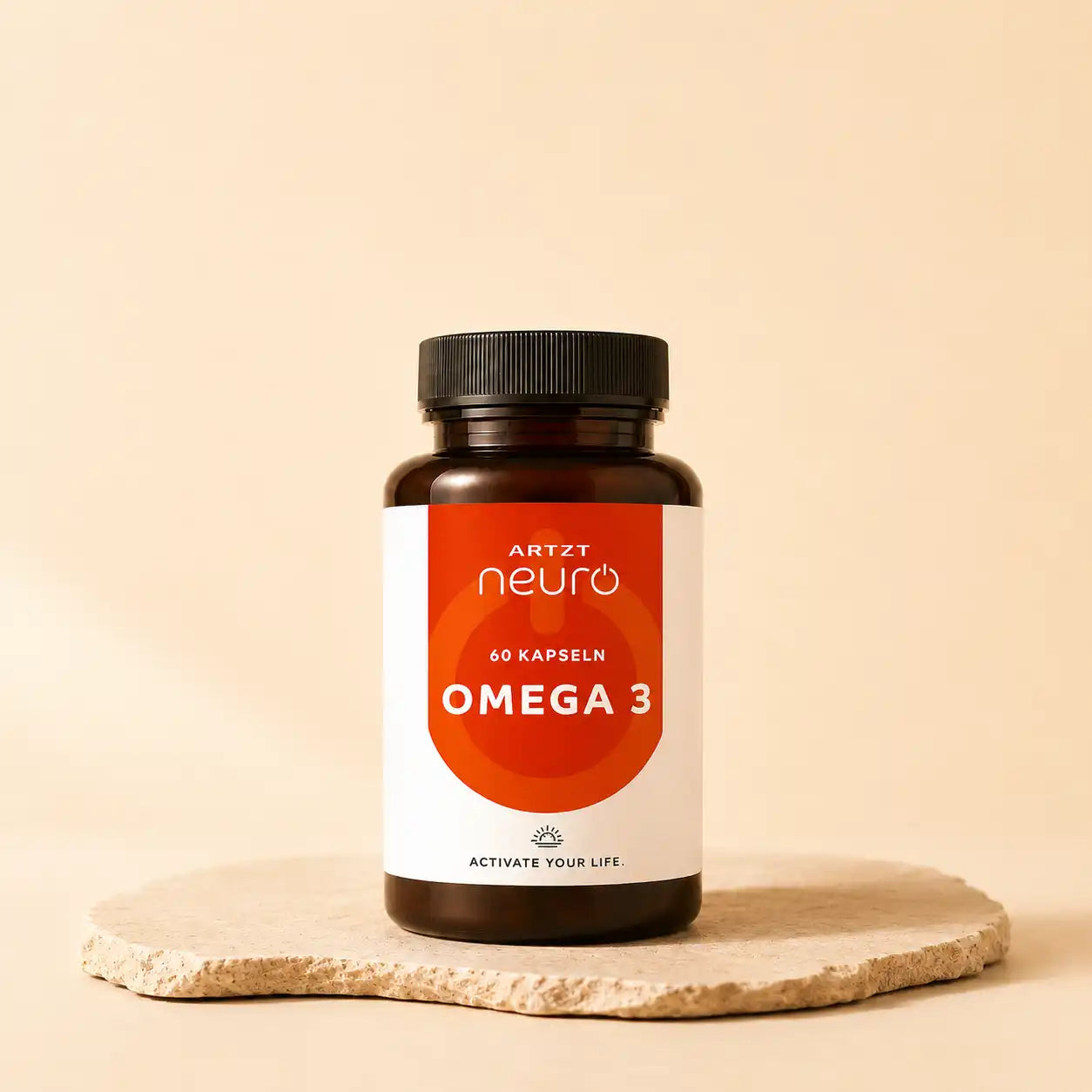
- Omega-3 fatty acids: The average omega-3 index in Germany is, according to current studies, 5–6%, far below the optimal range of 8–11%.⁶ EPA and DHA contribute to normal heart function; DHA contributes to the maintenance of normal brain function. In an environment with plenty of fatty sea fish, this deficiency would not have arisen.
These gaps are not a sign of poor nutrition. They are the result of a mismatch between evolutionary origin and modern food environment.

Why symptom treatment alone is not enough
The dominant health model is reactive: If something isn't working, we look for the isolated problem and the targeted single solution. Concentration gone? Caffeine. Can't sleep well? Sleeping pill. Exhausted? More vacation.
This logic falls short – not because the individual measures are wrong, but because they do not address the root cause. Those who do not understand the evolutionary mismatch treat symptoms while the underlying system remains under pressure.
In this context, holistic health means: returning to the basic biological conditions that our system needs. Not as a lifestyle philosophy, but as an evidence-based answer to a structural problem. What this specifically means and why individual measures are often not enough is the core of Holistic Health.
Conclusion: Understanding the problem before trying to solve it
Most people try to combat exhaustion, listlessness, and concentration problems with more: more discipline, more supplements, more sleep, more training. And they wonder why nothing fundamentally changes.
The problem is not a lack of will. It is a lack of understanding – of the biological situation we are in.
Your body is not broken. It is reacting to an environment it is not designed for. Understanding this is the first step towards holistic health – not as a goal one eventually achieves, but as a system one understands and continuously supports.
References
¹ Lea, A. J., Gurven, M., Lieberman, D. E. et al. (2023): „Applying an evolutionary mismatch framework to understand disease susceptibility." PLOS Biology, 21(9), e3002311.
DOI: https://doi.org/10.1371/journal.pbio.3002311
² DKV-Report 2025: „Deutschland im Gesundheitscheck". DKV Deutsche Krankenversicherung AG, Deutsche Sporthochschule Köln und Universität Würzburg, August 2025.
URL: https://www.dshs-koeln.de/universitaet/newsroom/meldungen/detail/news/dkv-report-2025-deutschland-im-gesundheitscheck
³ Pedersen, B. K. & Febbraio, M. A. (2012): „Muscles, exercise and obesity: skeletal muscle as a secretory organ." Nature Reviews Endocrinology, 8(8), 457–465.
DOI: https://doi.org/10.1038/nrendo.2012.49
⁴ Max Rubner-Institut (Hrsg.) (2008): Nationale Verzehrsstudie II. Ergebnisbericht, Teil 2. Bundesforschungsinstitut für Ernährung und Lebensmittel, Karlsruhe.
URL: https://www.mri.bund.de/de/institute/ernaehrungsverhalten/forschungsprojekte/nvsii/
⁵ Rabenberg, M. & Mensink, G. B. M. (2016): „Vitamin-D-Status in Deutschland." Journal of Health Monitoring, 1(2). Robert Koch-Institut, Berlin.
DOI: https://doi.org/10.17886/RKI-GBE-2016-042
⁶ Schuchardt, J. P. et al. (2024): „Omega-3 world map: 2024 update." Progress in Lipid Research, 95, Article 101286.
DOI: https://doi.org/10.1016/j.plipres.2024.101286